Iowa bills pitch improvements to subacute mental health services


Inside Iowa’s 2025 Legislative Session: How a Bill Becomes Law
Explore the process of how a bill becomes law in Iowa, insights into the 2025 legislative session, key deadlines, and how you can stay informed.
- Iowa lawmakers are considering two bills to improve access to subacute mental health care.
- The proposed legislation aims to remove barriers like treatment time limits.
- Advocates say the changes will help Iowans who need more support than outpatient care but do not require hospitalization.
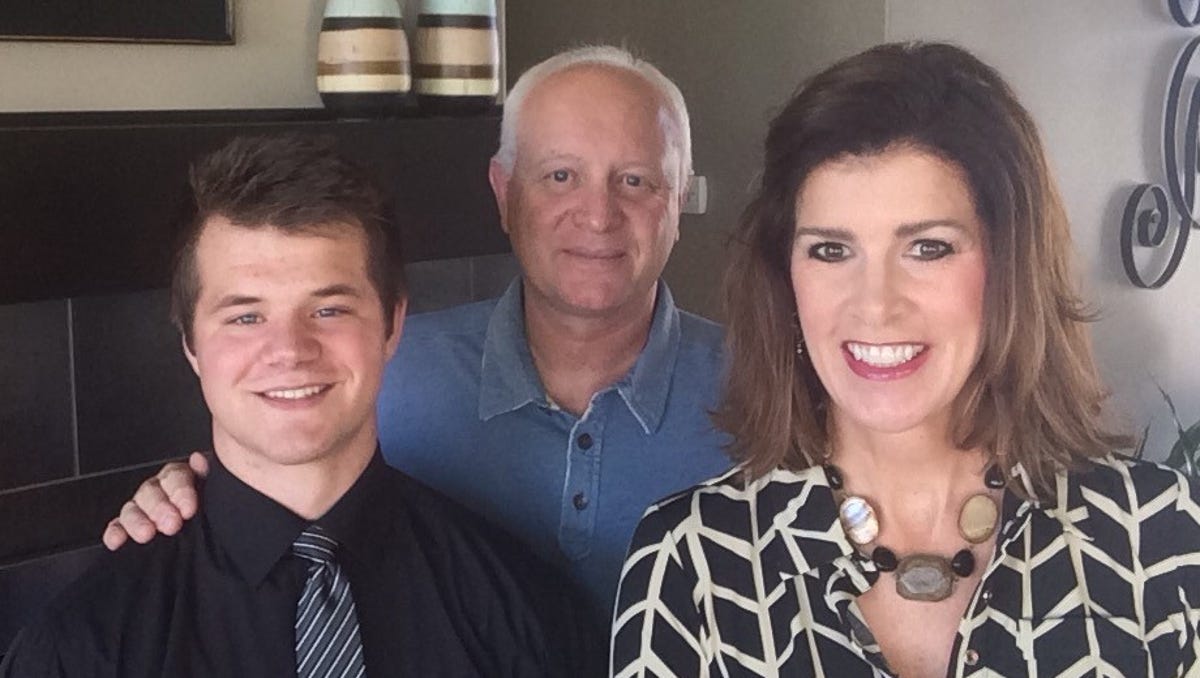
Mary Neubauer had to send her son out of state for mental health care because Iowa lacked the services he desperately needed.
She and her husband sent their son Sergei to Wisconsin and Arizona to try to get him help for major depression, anxiety and post-traumatic stress disorder he dealt with after a “tumultuous” childhood in Russia. They adopted him in 2009.
Sergei, an Urbandale High School graduate, ultimately died by suicide in 2017. His parents openly shared his mental health struggles in his obituary, where they implored policymakers “everywhere to recognize the toll that mental health struggles and addictions are taking on our society, particularly our young people.”
Neubauer has since testified to lawmakers in a plea to ensure other families don’t lose their loved ones to the same fate because of Iowa’s mental health service gaps.
“I can tell you as a family member, it’s excruciating because you’re trying your best to support this person and when they’re halfway across the country, it’s really hard to do and I think it makes it that much harder for the patient as well because they’re starting over in a new place and they don’t have their family member with them,” Neubauer said. “So if we can build this level of care in Iowa and make it successful, I think we’ll be doing a great thing for the families who need that care.”
Neubauer, a former Iowa Lottery spokesperson who lives in Clive, is pushing lawmakers to expand subacute mental health programs, a type of care that officials say is scarce and hard to access in Iowa. Subacute mental health programs serve people who do not need emergency hospitalization but need more intensive support than is available through outpatient care.
State lawmakers have advanced two measures that would make comprehensive changes in subacute mental health care in Iowa and aim to remove barriers to treatment.
The House proposal, House File 2220, advanced in a subcommittee hearing Tuesday, Feb. 10. The Senate’s bill, Senate File 2202, passed out of committee on Feb. 5 and is eligible for the full Senate’s consideration.
What would the bills do?
Under the House bill, a mental health facility would be required to draft a treatment plan within 24 hours of a resident’s admission.
The proposal removes a 10-day limit on the length a person can receive subacute care and prevents managed care organizations from discharging patients until the mental health professional supervising their treatment determines proper supports are in place. That’s intended to curb the risk of a person harming themselves or others after being discharged.
The Senate bill also eliminates the 10-day cap and allows the Iowa Department of Health and Human Services to adopt a rule permitting longer stays.
The House bill requires Iowa HHS to develop a system to track available beds at psychiatric medical institutions for children.
And it limits requirements for prior authorization — the submission of clinical documentation justifying their treatment — for the first 15 days of a patient’s stay. A managed care organization couldn’t review the medical necessity of a person’s stay until the 45th day of treatment.
The Senate bill instead outlines a timeline that MCOs must follow to grant prior authorization based on the urgency of an individual’s case ranging from 48 hours to 10 days after a mental health provider submits a request.
Neubauer said the House bill was more comprehensive but she would welcome the changes outlined in either proposal.
Mental health advocates support provision lifting treatment barriers
Lynh Patterson, representing Wellpoint Iowa, which is one of the MCOs, said Wellpoint was concerned about limiting prior authorization language and did not see that as a barrier to accessing subacute services as lawmakers considered the House bill Tuesday morning.
She said Wellpoint approved all prior authorization requests in 2025. Wellpoint’s data show subacute stays are eight days long on average, so she questioned the need to extend the length of time.
But Neubauer said other states allow longer windows of treatment and Iowa’s average may result from Iowa’s 10-day cap on subacute care. She supported removing the statutory limit to allow patients time to put treatment techniques into practice and for professionals to monitor and adjust their prescribed medications.
Neubauer said if a health provider recommends this level of care and an analysis shows the patient should receive this level of care, insurance providers should not require the sometimes lengthy prior authorization process.
The wait for prior authorization, which varies but can sometimes take 15 days, means a patient doesn’t know whether their services will be covered or they’re made to wait until approved, Neubauer said. She told lawmakers “15 days from now is really no help at all” to someone in crisis.
Patterson said subacute care is meant to stabilize a patient and then find the correct level of care for them elsewhere.
Rep. Rob Johnson, D-Des Moines, said 45 days may be enough time to stabilize someone and insufficient subacute care has placed too much of a burden on law enforcement and taken up emergency room resources.
As a minister who does funeral services, Johnson said he has done too many for people who couldn’t access the mental health care they needed.
“Too many families are left with an empty chair at the dinner table and that’s why I believe we have to move this forward,” Johnson said.
Rep. Craig Johnson, R-Independence, said loved ones in his own life have struggled to get timely and adequate mental health care.
“I think all of us at one point or another in our lives have had family members, friends or someone that we know and love subjected to maybe not the care and services that we would’ve liked to (have) seen,” he said.
Marissa Payne covers the Iowa Statehouse and politics for the Register. Reach her by email at [email protected]. Follow her on X at @marissajpayne.
link