Fulton County Health Center reopens expanded heart and vascular center |
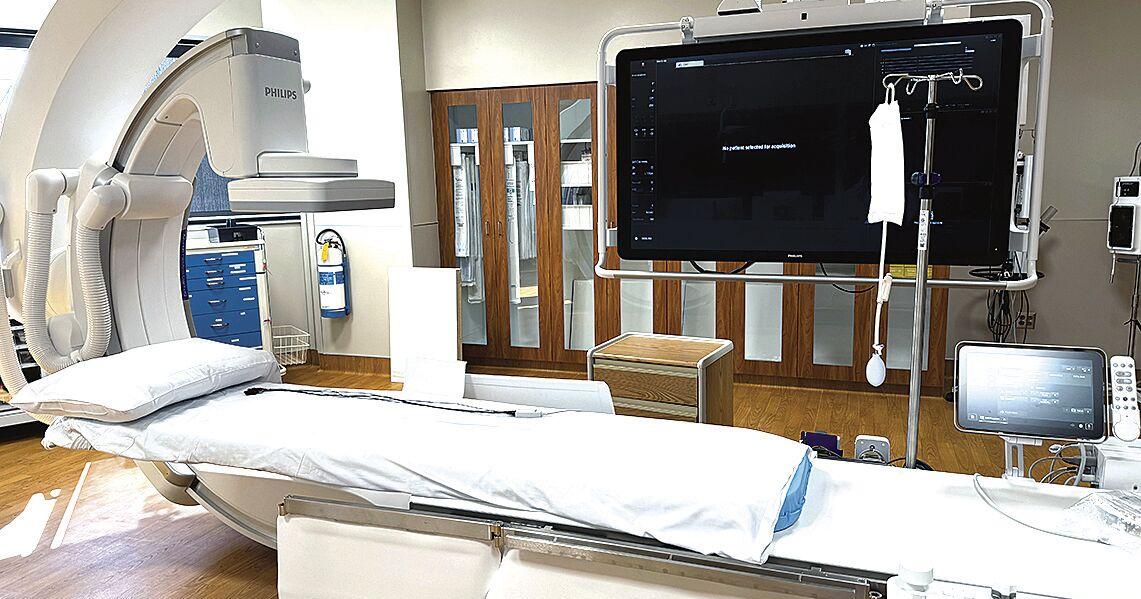
WAUSEON — On Sept. 16, Fulton County Health Center reopened its expanded and all new Heart and Vascular Center.
Over the past several months, FCHC has been working on a major expansion of the Heart and Vascular Center. The project included remodeling and doubling the size of the Heart and Vascular Center, expanding to having two catheterization labs and more space for other heart-related services. During the past several month a mobile unit was onsite while the old Heart and Vascular Center was remodeled and expanded.
During the renovation, Fulton County Health Center also received a Level II Adult Cardiac Catheterization Health Care Service designation July 31 from the Ohio Department of Health. This designation is a step up from the facility’s original Level I designation that was primarily for diagnostic heart catheterizations except in an emergency where a patient needed immediate cardiac intervention.
With a Level II designation, the Heart and Vascular Center can perform interventional cardiology procedures including: left and right heart catheterization; coronary angiography; percutaneous coronary intervention (PCI); intravascular ultrasonography (IVUS); fractional flow reserve (FFR); and peripheral vascular diagnostic and interventional procedures.
“Now that we have the Level II designation, in early November we will become fully operational 24/7,” said Charles Gbur Jr., MD, FACC, FSCAI, interventional cardiologist. “This means patients can be diagnosed with a heart catheterization and treated on site at the same time right here in Wauseon.
“With the next closest facility 30 or more minutes away, any delay in care could impact the outcome of the patient,” he continued. “So offering the intervention here in Wauseon not only saves time but is a life-saving service that has been missing from the area.”
Diagnostic cardiac catheterization uses a catheter to examine how the heart is working and to determine if there is a blockage. Interventional catheterization takes it one step further, and the interventional cardiologist treats or repairs the heart condition at the same time. Both procedures are considered minimally invasive.
In both procedures, a catheter is inserted into a blood vessel in the arm or leg. The interventional cardiologist guides the catheter through the blood vessel to the arteries near the heart. Contrast material and X-rays are used to look for blockages and abnormalities in the vessels.
If a blockage is found, balloon angioplasty may be done along with the placement of a stent to open the blood flow of the artery, with follow-up care scheduled and possibly new medications and lifestyle changes may be recommended to prevent further blockages and to strengthen the heart.
On Sunday, Nov. 3 from 1-3:30 p.m., the FCHC Heart and Vascular Center will have an open house for the public to see the new expanded center. The Heart and Vascular Center is located on the second floor of the hospital near the Surgery Waiting area. Parking for the event is in lots mark P1 and P2 near the Emergency Department entrance where visitors can take the elevator up to the Surgery Waiting area to begin the tour, meet the staff and learn about all the services now being offered.
For more information, call 419-337-7314.
link