Flossing weekly can cut stroke risk, says AHA study
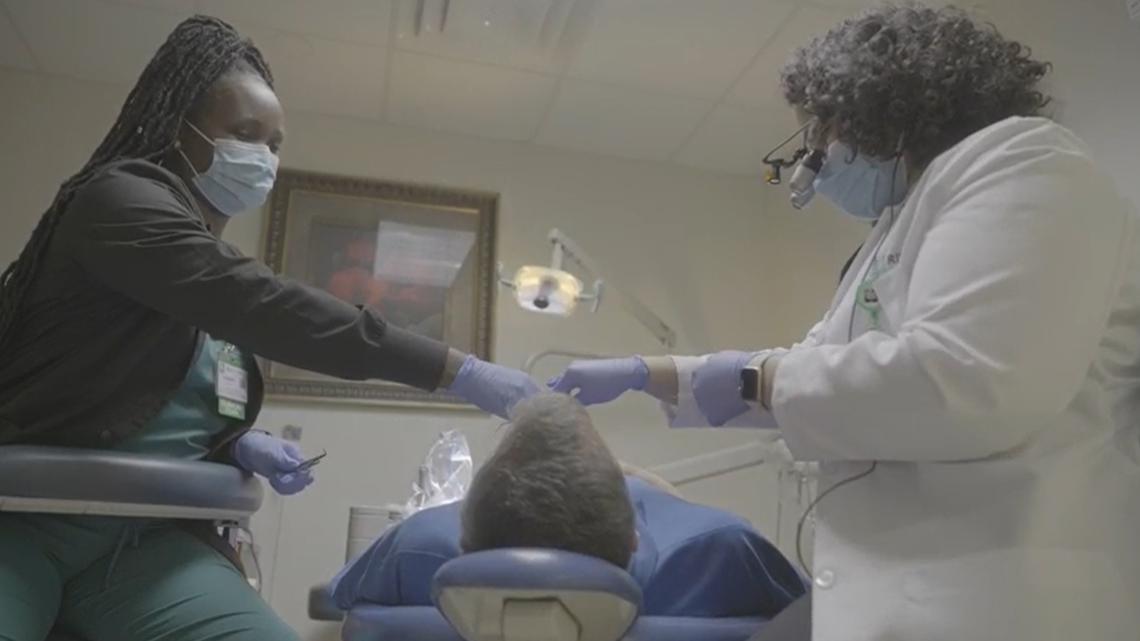
A 25-year American Heart Association study links flossing to reduced stroke and heart rhythm risks. Dr. Charlee Goodman says oral care could impact overall health.
NEWPORT NEWS, Va. — Flossing may be one of the simplest things you’re not doing that could save your life.
A recent study from the American Heart Association (AHA) suggests flossing– even just once a week– can significantly lower your risk of stroke, especially those caused by blood clots. The research, which followed more than 6,000 adults over 25 years, also links better oral hygiene to a reduced risk of heart rhythm issues like atrial fibrillation (AFib).
Meanwhile, more than a third of participants admitted they don’t floss at all– and those people had higher rates of stroke and AFib.
Dr. Charlee Goodman, a general dentist with Riverside Health, said it’s the kind of finding that should make you rethink skipping the dental habit.
“We have to remember that our mouth is connected to the rest of our body,” Dr. Goodman said. “There’s a lot of bacteria in our mouth. And if we’re not flossing daily or brushing, you know, every day, that bacteria can accumulate and potentially go through our blood vessels from our mouth into our body and cause a lot more inflammation.”
Inflammation is one of the body’s biggest enemies when it comes to strokes and heart disease. Dr. Goodman said she’s seen the impact of poor oral health as she treats patients at Riverside’s Charlie W. and Golden Bethune Hill Community Health Clinic in Newport News. She pointed out that neglecting your mouth can cause much bigger problems than cavities.
“We could experience tooth pain, tooth loss, gum disease, chronic gum disease– that’s irreversible,” Dr. Goodman said. “It impacts our eating– so, maybe not getting the nutrients we need. So, if we’re fighting other battles with our medical conditions– like diabetes, cancer, pregnancy… it makes it difficult for our body to do the other things that it needs to do.”
That’s because the bacteria don’t just stay in your mouth. Dr. Goodman said the inflammation triggered by poor oral hygiene can ripple through the entire body, especially when the immune system is already working overtime.
“If we’re already immunocompromised or medically compromised, like, we already have those risk factors for stroke, heart disease, valve infection– that bacteria just makes it a little bit too much for our body,” she said.
Dr. Goodman said the data adds urgency to something she already emphasizes in her practice– you don’t have to have a perfect oral care routine. Just start somewhere.
“Flossing once a day, once a week, every other day is better than no flossing at all,” she said. “We want to create a really good habit.”
If flossing feels like a chore, her tip is to treat it like self-care.
“This could just be part of your skincare routine or your overall health routine before you go to bed,” Dr. Goodman said. “And just make it a little bit more exciting for yourself. It doesn’t have to be such a bad thing to floss.”
Due to the connection between your gum health and your overall health, the AHA’s research suggests flossing could be one of the easiest, cheapest ways to protect your brain and your heart. Dr Goodman said even something as simple as buying new floss or trying a water pick can set you on a healthier path.
To learn more about dental health resources or to schedule an appointment, visit Riverside Health’s website or talk to your local dentist.
link