


Table of Contents
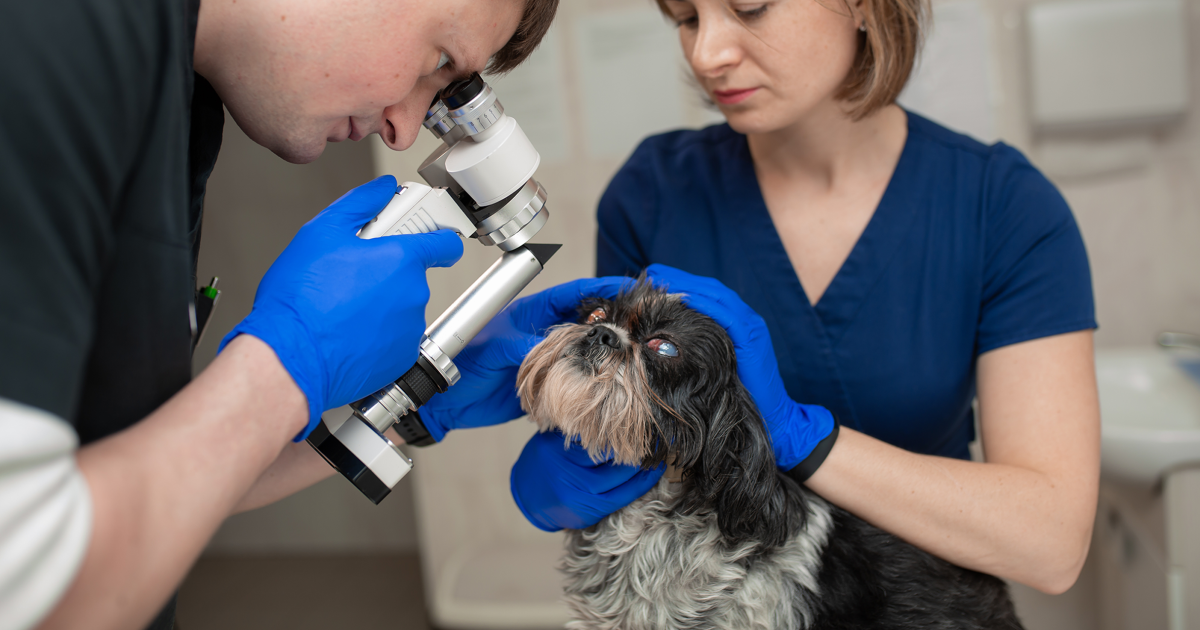
Veterinary ophthalmology occupies a distinct niche in medical science, functioning simultaneously as a high-acuity clinical specialty and a rigorous research discipline. Practitioners are responsible for the diagnosis, treatment, and prevention of ocular pathologies across a diverse phylogenetic spectrum.
Beyond the operating theater, these specialists are integral to biomedical research; they design studies and refine examination techniques to ensure that data collection meets regulatory standards while accounting for species-specific ocular anatomy [1]. This dual focus ensures that advancements in vision science are grounded in accurate, reproducible data.
Training Standards for the Veterinary Eye Doctor
Achieving board certification in veterinary ophthalmology requires an educational trajectory paralleling that of a human medical doctor. The process begins with medical school followed by a rotating internship and a specialized four year residency. This rigorous clinical training distinguishes the specialist from a general practitioner.
The distinction is similar to the difference between optometrists and ophthalmologists in human healthcare. While optometrists attend optometry school to provide primary vision care and write prescriptions for glasses, the ophthalmologist—whether treating humans or animals—undergoes extensive surgical training.
Organizations like the American College of Veterinary Ophthalmologists establish the benchmarks for this specialized training. Candidates must master the anatomy of the human eye and animal eye alike to understand comparative physiology. Only after completing these requirements can a doctor claim the expertise necessary to diagnose complex eye disorders and perform surgery with high success rates. This depth of knowledge ensures that physicians in the veterinary field are equipped to handle intricate eye and vision issues that exceed the scope of primary care.
RELATED: What Makes a Vet Truly “Day-One Ready”?
Therapeutic Approaches to Degenerative Disease
In daily practice, ophthalmologists manage a spectrum of debilitating conditions, including cataracts, glaucoma, and inherited retinal disorders. A significant component of clinical management involves decision-making in the absence of robust data; a survey of board-certified specialists revealed a widespread tendency to prescribe neuroprotective therapies for canine degenerative retinal and optic nerve diseases [2]. This occurs even when specific clinical trial data is limited, highlighting a proactive approach to vision preservation in cases of progressive retinal atrophy and sudden vision loss.
Education remains a central pillar of the profession. Specialists train general practitioners and veterinary students in essential diagnostic techniques, such as direct and indirect ophthalmoscopy [3]. Proficiency in these methods enables primary care veterinarians to detect subtle pathology early, facilitating timely referrals that can prevent permanent blindness.

The Importance of Regular Eye Exams and Healthy Vision
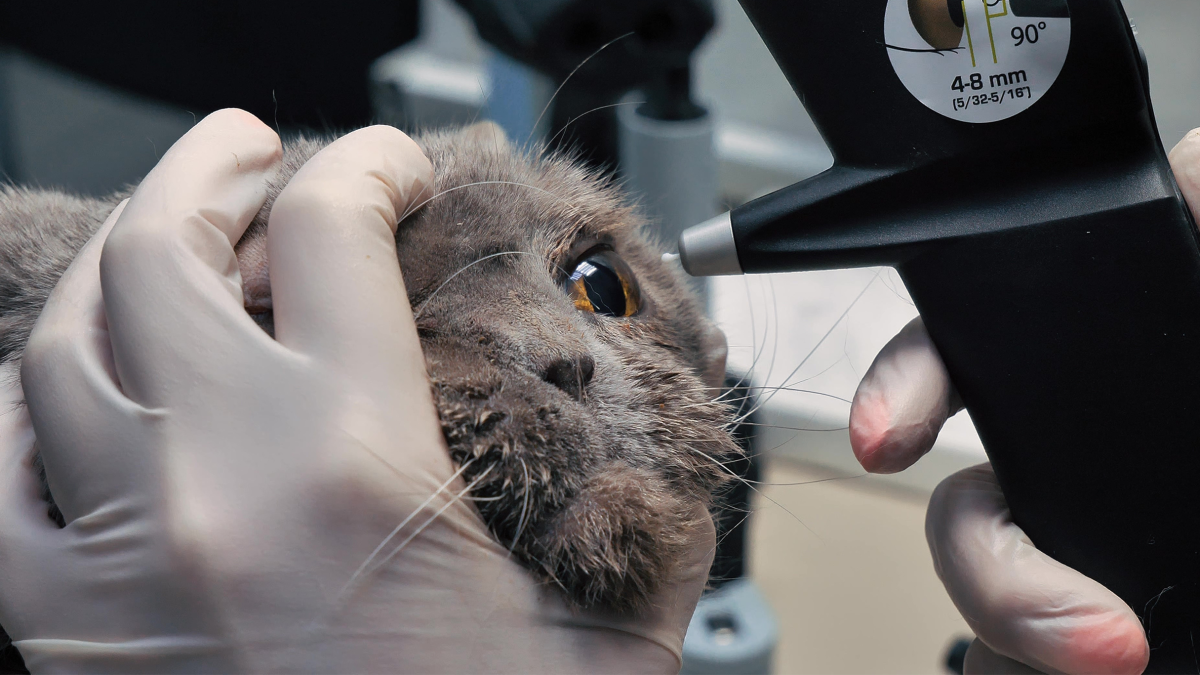
Maintaining healthy vision requires a proactive schedule of regular eye exams. During a complete appointment, the specialist utilizes advanced instrumentation to test vision and assess ocular health. Key metrics include intraocular pressure measurement and quantitation of tear production. These diagnostic steps allow the clinician to diagnose and treat insidious health conditions such as glaucoma or keratoconjunctivitis sicca before they cause irreversible damage.
Unlike human patients who can verbalize symptoms or vision changes, animals often mask discomfort. Therefore, routine eye exams serve as the primary defense against silent eye problems. While the veterinary patient does not require contact lenses or vision correction in the traditional sense, the goal of eye care remains the preservation of functional sight. Identifying eye conditions early allows for successful treatment, preventing the progression of pathology that could lead to vision issues or total blindness.
Occupational Health and Genetic Screening
For working animals, visual acuity is a matter of safety and operational capability. Service animals, including guide dogs and police K-9 units, require rigorous ocular monitoring. Research indicates that regular examinations identify early physiological changes, such as minor cataracts or refractive errors; detecting these issues before they manifest as performance deficits is critical for extending the working life of the animal [4].
Preventative medicine extends into reproductive management. Ophthalmologists conduct screenings within breeding programs to identify markers of inherited eye disease [5]. This genetic surveillance reduces the propagation of congenital vision defects, serving as a firewall against the transmission of deleterious traits to future generations.
Emergency Interventions and Advanced Diagnostics
Acute ocular distress demands immediate, precise intervention. Cases involving trauma, sudden onset blindness, or intractable pain require rapid stabilization to salvage vision or the globe itself [6]. When standard examinations fail to elucidate the etiology of blindness, specialists employ advanced diagnostic modalities. Techniques such as ultrasound-guided aspiration allow for the collection of subretinal samples, aiding in the identification of rare or obscure pathologies [7].
RELATED: Improve Your Pet’s Care: Essential Questions for Every Veterinary Visit
Surgical Training and Advanced Eye Care
When medical management fails, surgical eye care becomes necessary. Veterinary ophthalmologists are uniquely qualified to manage severe eye injuries and structural defects. Common procedures include cataract surgery to restore transparency to the lens and complex repairs for retinal detachment. The level of precision required for eye surgery is immense. The specialist must navigate microscopic structures to ensure vision correction or preservation.
While human ophthalmologists often focus on corrective lenses or contact lenses to improve acuity, the veterinary surgeon focuses on anatomic restoration. Whether treating patients for corneal ulcers or prescribing medications to manage inflammation post-operatively, the focus remains on alleviating pain and restoring function. This additional training ensures that even the most challenging eye and vision care scenarios are managed with the highest standard of medical competence.
Species-Specific Management Strategies
The diversity of patients requires high adaptability in treatment protocols. In agricultural settings, the ophthalmologist must weigh clinical efficacy against production realities. Treating conditions like infectious keratoconjunctivitis in cattle involves balancing animal welfare with the economic constraints of herd management [8].
Exotic and equine medicine presents further challenges, particularly regarding pharmacotherapy. Treating fungal infections in horses or ocular dermatological issues in reptiles necessitates a nuanced understanding of comparative pharmacology. Specialists must select antifungals and other medications based on a complex matrix of factors, including disease severity, concurrent drug therapies, and the unique metabolic profile of the species [9].
Closing Thoughts
The discipline of veterinary ophthalmology represents a critical intersection of advanced medical science and compassionate animal stewardship. Through a combination of rigorous residency training, sophisticated clinical training, and a dedication to research, these specialists provide a level of care that rivals human medicine. Whether the task involves a routine exams to monitor eye health or emergency intervention to repair a retinal detachment, the objective remains constant.
By bridging the gap between basic science and clinical application, veterinary ophthalmologists ensure that animals—from cherished pets to vital working stock—maintain the healthy vision necessary for a high quality of life. The field continues to evolve, driven by a commitment to diagnose, treat, and cure the most complex ocular diseases found in nature.
References
[1] Munger R. J. (2002). Veterinary ophthalmology in laboratory animal studies. Veterinary ophthalmology, 5(3), 167–175.
[2] Author, A. A.Hopper, R. G., Montiani-Ferreira, F., da Silva Pereira, J., Fritz, M. C., Ruggiero, V. J., Sapienza, J. S., Kato, K., & Komáromy, A. M. (2021). Presumed neuroprotective therapies prescribed by veterinary ophthalmologists for canine degenerative retinal and optic nerve diseases. Veterinary ophthalmology, 24(3), 229–239.
[3] Author, A. A. Dos Santos Martins, T. G., Schor, P., Stuchi, J. A., & Fowler, S. B. (2022). New Direct and Indirect Ophthalmoscopy Teaching Methodology for Veterinary Doctors. Journal of veterinary medical education, 49(2), 204–209.
[4] Author, A. A. de Oliveira, J. K., Bortolini, M., Schaller, M., Schuchmann, R. K., Moore, B. A., & Montiani-Ferreira, F. (2020). The ophthalmic health and refractive state of working dogs in South Brazil. Open veterinary journal, 10(1), 22–30.
[5] Author, A. A. Diehl, K. A., Asif, S. K., & Mowat, F. (2023). Ophthalmic Disease and Screening in Breeding Dogs. The Veterinary clinics of North America. Small animal practice, 53(5), 965–983.
[6] Author, A. A. Mandell, D. C., & Holt, E. (2005). Ophthalmic emergencies. The Veterinary clinics of North America. Small animal practice, 35(2), 455–viii.
[7] Author, A. A. Rizzi, T. E., Cowell, R. L., Meinkoth, J. H., & Gilmour, M. A. (2006). More than meets the eye: subretinal aspirate from an acutely blind dog. Veterinary clinical pathology, 35(1), 111–113.
[8] Author, A. A. Williams D. L. (2010). Welfare issues in farm animal ophthalmology. The Veterinary clinics of North America. Food animal practice, 26(3), 427–435.
link